SSL certificates have long become essential for any website, ensuring data encryption and search engine visibility. But with so many options available, getting the best certificate for your site can be tricky. You must decide on the validation type and extra features and choose between paid or free alternatives.
This article covers free SSL vs paid SSL certificates in great detail, helping you understand the similarities and differences between the two options.
What is an SSL Certificate?

An SSL Certificate secures sensitive information such as credit card numbers, passwords, and other personal details. An SSL certificate also helps to ensure the authenticity of a website by verifying its ownership.
The main benefit of an SSL certificate is that it provides encryption for data transmitted over the internet, making it more difficult for malicious actors to intercept or access this information. This ensures that any data sent from your visitors’ computers to your web server remains private and secure. SSL certificates can also foster confidence in customers by indicating that your website takes their safety seriously.
Free SSL Certificates
- Domain Validation SSL only – As we’ve defined free SSL, it’s only limited to domain validation (DV). This is ideal for small websites and blogs that don’t need data collection from their website visitors. These websites only require a basic level of authentication.
- Limited Use – Free SSL certificates are suitable for basic blogging websites with no financial data collection, but they’re not ideal for businesses. Dedicated business owners and website owners must go for Organization Validated or Extended Validation certificates instead, to prove their legitimacy.
- Short Validity Period – A basic free SSL certificate issued by a CA can be used up to 30-90 days, and website owners must renew the certificates frequently.
- Insubstantial Technical Support – Since it’s available for free, users cannot expect technical support when trouble comes in. They must rely on forums where other free SSL users gather to provide tips and guidance on how to fix SSL related issues.
- Ambiguous Level of Trust – Not all SSL certificates are created equally. Since open-source SSL certificate providers offer these for free, users don’t have the assurance of proper encryption and protection. There were occurrences that free SSL certificates had major issues in the past.
- Warranty – No warranty comes with this option. When data breaches and cyber-attacks happen to the website, the warranty money becomes a last resort to rebuild the company’s website and pay for the data breach penalties that the government mandates. Without the warranty money, the company becomes vulnerable to bankruptcy.
Paid SSL Certificates
A website owner can purchase SSL certificates from Certificate Authorities (CAs) or authorized third-party resellers. It may come in different variants, but Domain Validated (DV) SSL, Organization Validated (OV) SSL, and Extended Validation (EV) SSL are the most purchased types of SSL certificates.
Domain Validated (DV) SSL
This has the lowest level of validation among the three SSL certificates because it’s only checked against the domain registry. It provides the “S” in the HTTPS connection, and the CA doesn’t require a meticulous vetting process to acquire this certificate. Also, this is compatible with 99.99% web and mobile browsers.
Organization Validated (OV) SSL
OV certificates comply with the X.509 RFC standards that show all important information to validate an organization. The CA authenticates the organization’s identity before certificate issuance, which may require a few days of verification.
Extended Validation (EV) SSL
The CA conducts a strict validation in this type of SSL certificate. Trained professional agents authenticate the business identity using the business registry databases that the governments host.
Different SSL certificates provide a varying degree of trust to website users. Aside from those features, you’ll get the following benefits from paid SSL certificates:
- Variety of Choices – Paid SSL certificates are best used on e-commerce websites, social media websites, and lead generation websites. These websites collect sensitive information from their website users. Paid SSLs have three options: Domain Validated (DV), Organization Validated (OV), and Extended Validation (EV). Each of these has different levels of authentication and Extended Validation SSL is considered the strongest. Aside from the three popular types of SSL certificates, users may also purchase single-domain, wildcard, and multi-domain certificates that provide website security.
- Level of Validation – CAs conduct an intensive validation process to make sure the paid SSL certificates (OV and EV) go to a legitimate, trustworthy owner.
- Extended Validity Period – Paid SSL certificates are valid upto 27 months only. It must be renewed after every validity period to make sure its components are up-to-date and compliant to industry standards.
- Technical Support – The money that a user invested in a paid SSL certificate comes with notable technical support from their CA. They have a committed team of trained technical experts to support the users throughout the certificate’s life cycle. Users may also choose to contact their CA technical support team through email, chat, or call.
- Level of Trust – As we’ve mentioned before, paid SSL certificates come in different variants, namely DV, OV, EV, and many more. Depending on the level, these certificates can show the organization’s name, country, city, and state. Also, the website visitors can see which CA issued the certificate. If the website visitors are still in doubt, they may visit the CA/B Forum’s list of members for further details.
Another visual indicator that proves a website’s legitimacy is through the “https” and the “green bar” found on the search bar when you access the website.
- Valuable Warranty – Given the level of encryption that CAs promise, users can expect full protection from data breaches. However, if a data breach happens, the user is insured and can receive an amount of US$10K to US$1.5M – depending on the type of certificate they own. It is the payment for damages that the user lost from the data breach.
SSL free vs paid: Pros and cons
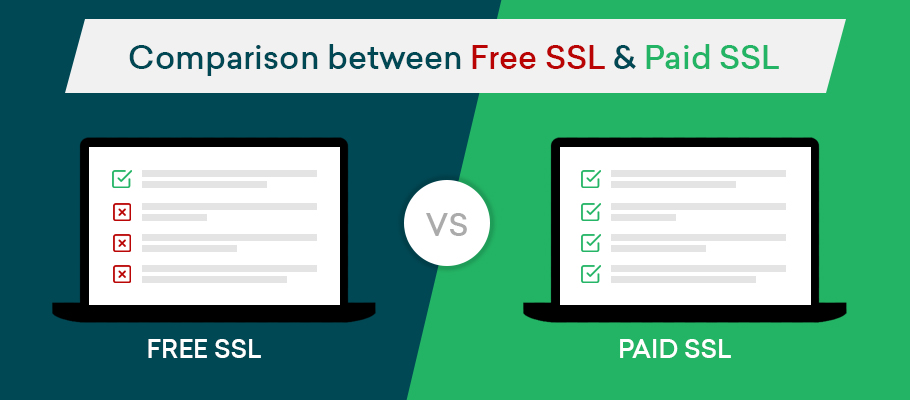
Below is a summary of the pros and cons of free SSL vs paid SSL
Free SSL Certificates
Pros
- Cost-efficiency: Requires no financial investment. They’re ideal for website owners with tight budgets.
- Encryption: Free SSL certificates provide the same level of encryption as their paid counterparts.
- Quick setup: Obtaining and installing a free SSL certificate is usually a straightforward process, and some providers even offer automation.
- Basic security: This is good for personal blogs, small websites, or non-profit organizations that don’t handle sensitive data.
Cons
- Limited validation: Free SSL certificates often provide only Domain Validation (DV), which verifies domain ownership but not the identity of the website owner or organization.
- Short validity period: Free SSL certificates typically have shorter lifespans, often requiring renewal every 90 days.
- No warranty: Free versions do not come with a warranty, leaving you without financial protection in case of security breaches.
- Lack of trust indicators: Free certificates may lack visual trust indicators like a green address bar or business name in the certificate.
- Limited support: Technical support for free SSL certificates can be minimal, making troubleshooting more challenging.
Paid SSL Certificates
Pros
- obust validation: Paid SSL certificates offer various levels of validation, including Domain Validation (DV), Organization Validation (OV), and Extended Validation (EV), providing a higher level of trust and authentication.
- Extended features: Paid certificates often come with advanced features such as vulnerability assessments, daily malware scanning, and reputation monitoring, enhancing your website’s security.
- Warranty: Paid SSL certificates typically include a warranty that covers financial losses in the event of a security breach, providing added peace of mind.
- Extended validity: Paid certificates have longer validity periods, reducing the frequency of certificate renewals and associated administrative tasks.
- Dedicated support: Paid SSL providers usually offer dedicated customer support, ensuring prompt assistance in case of issues.
Cons
- Cost: The primary and perhaps the only drawback of paid SSL certificates is the cost, which can vary depending on the level of validation and features included. For basic personal websites or blogs, the added features and cost of a paid SSL certificate may be unnecessary.
- Complex setup: Setting up and configuring paid SSL certificates may require more time and technical expertise compared to their free counterparts.
Conclusion
Free and Paid SSL certificates differ significantly in their technical aspects. While both provide the same encryption strength and perform the same function, Paid SSL certs offer extra features like – organization and extended validation, 24/7 customer support, a more extended lifespan, and a warranty covering financial losses due to SSL-related issues.
Choosing between free and paid SSL certificates depends on individual needs. For greater security, customer support, and trust-building features, opting for a Paid SSL certificate from a trusted CA is recommended.