Introduction to Reseller Hosting
In the dynamic realm of web hosting, reseller hosting has emerged as a strategic solution for entrepreneurs and businesses looking to venture into the hosting industry without the need to invest in and manage their own infrastructure. This model offers a unique opportunity for individuals to act as intermediaries between a hosting provider and end-users, facilitating the distribution of hosting resources.
What is Reseller Hosting

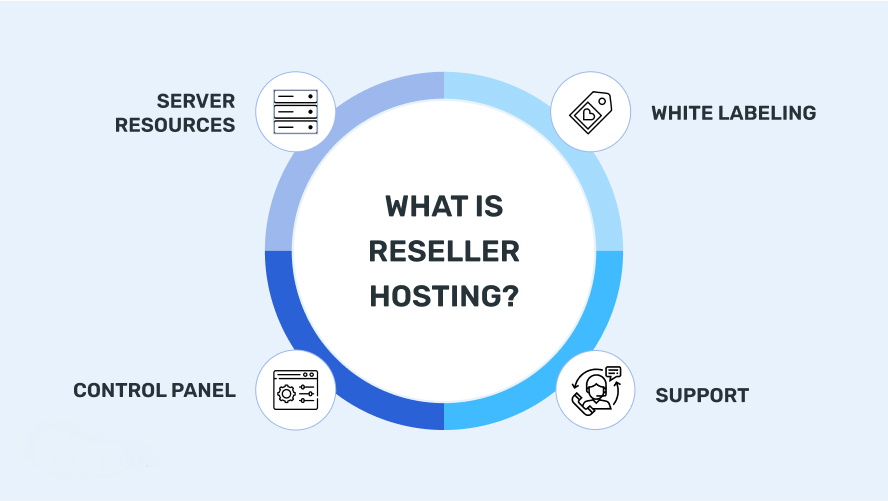
Reseller hosting is a form of web hosting where an individual or a company purchases hosting resources from a larger hosting provider and then sells or rents these resources to their own clients. In essence, the reseller acts as an intermediary between the hosting provider and the end-users, often offering hosting services under their own brand.
The Role of Reseller Hosting Providers
Usually, the hosting provider will handle the technical side of web hosting. This includes server maintenance, security, and software updates.
In contrast, resellers buy a big hosting package from a provider and then splits it into smaller packages to sell to many customers.
Resellers sell and support their customers, and hosting providers maintain their web hosting. The combination makes reseller hosting an easy way to enter the web hosting market.
Types Of Reseller Hosting

- Linux Reseller Hosting:
- This type of reseller hosting is based on Linux servers.
- It supports scripting languages such as PHP, Perl, and MySQL databases.
- Linux reseller hosting is often more affordable and stable.
- Windows Reseller Hosting:
- This type of reseller hosting is based on Windows servers.
- It supports technologies such as ASP.NET, Microsoft SQL Server, and Windows-specific applications.
- Windows reseller hosting is suitable for businesses that require Windows-based technologies.
- cPanel Reseller Hosting:
- cPanel is a popular control panel used in many web hosting environments.
- Resellers with cPanel access can easily manage their hosting accounts, create packages, and provide clients with a user-friendly interface.
- Plesk Reseller Hosting:
- Plesk is another widely used control panel.
- Plesk reseller hosting allows users to manage hosting accounts and websites efficiently.
- Cloud Reseller Hosting:
- Cloud reseller hosting is based on cloud infrastructure, providing scalability and flexibility.
- Resources can be easily scaled up or down based on demand.
Here’s how reseller hosting typically works:
Obtaining a Reseller Hosting Plan:
The process begins with an individual or a business purchasing a reseller hosting plan from a hosting provider. This plan usually includes a specific amount of server resources, such as disk space, bandwidth, and the ability to host multiple websites.
Customizing Hosting Packages:
The reseller has the flexibility to customize hosting packages based on the needs of their clients. This may involve allocating specific amounts of resources to each client, setting up individual domain names, and defining other parameters.
Branding the Service:
Resellers often have the option to brand the hosting service as their own. This means they can use their own business name, logo, and other branding elements. Clients may not be aware that the reseller is leveraging a larger hosting infrastructure.
Setting Prices and Billing:
The reseller establishes pricing for the hosting packages they offer. The difference between the cost of the reseller hosting plan and the price charged to clients represents the reseller’s profit. Billing cycles and payment methods are typically determined by the reseller.
Acquiring and On boarding Clients:
With customized hosting packages in hand, the reseller can start acquiring clients. This involves marketing their hosting services, attracting customers, and onboarding them onto the hosting platform. The reseller is responsible for providing customer support to their clients.
Managing Hosting Accounts:
Reseller hosting plans often come with user-friendly control panels (e.g., cPanel) that make it easy for the reseller to manage hosting accounts. They can create, modify, and suspend accounts as needed, and monitor resource usage.
Technical Support:
While the hosting provider takes care of the server infrastructure, the reseller is responsible for providing technical support to their clients. This includes addressing issues related to website functionality, email, and other hosting-related concerns.
Scalability:
As the resellers business grows, they can easily scale up by upgrading their reseller hosting plan with the provider. This allows for accommodating more clients, offering additional resources, and expanding the range of services.
Relationship with the Hosting Provider:

The reseller maintains an ongoing relationship with the hosting provider. This includes paying for the reseller hosting plan, seeking technical assistance when needed, and staying informed about any updates or changes in the hosting environment.
By understanding and effectively navigating these steps, resellers can create a profitable business model while providing reliable hosting services to their clients.
Conclusion:
In the ever-evolving landscape of the internet, reseller hosting stands as a gateway for individuals and businesses to enter the hosting industry, offering a blend of flexibility, customization, and profit potential. By bridging the gap between hosting providers and end-users, resellers play a crucial role in delivering hosting solutions tailored to the diverse needs of website owners.